
Just for Graphs?
Optics, Political Weather and where the Writers' Room is

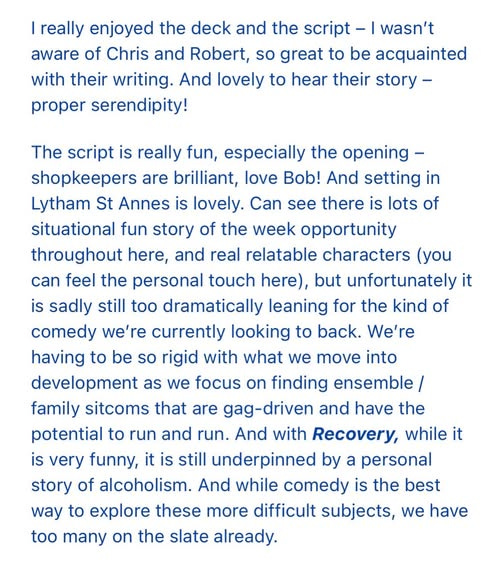
Last time I attempted an OU Social Science Foundation/Psych Level 2 rummage through some street talk aggregate from the bewildered of my acquaint including myself. Since then there have been significant stories about declining physical book reading and ,this morning, finally news of an enquiry into peremptory and unethical gender assignment programmes which travestied and closed down the only Psychdynamic therapy service available within the NHS at the Tavi, where the boffins seem to have got drunk on identarian power in the manner of those in Margaret Atwood’s ‘Oryx and Crake’, the second scariest book I have ever read on an obligatory high summer sclerotic bus journey from Finchley to Hammersmith before the Superloop.. She is so good at plausible cultural descent (rather than dissent) because as she occasionally reminds us, everything she writes about has happened in essence somewhere in her painstaking cuttings library. Comedy of course is also hard going at source ( my modest attempts are byte-sized and to immediate deadline accordingly) An old friend and colleague mine submitted in his customary bespoke manner a Sitcom treatment to a major mainstream broadcaster ( guess which) . This is part of the response:
This is Clare Alfree in The Sunday Telegraph today on ‘Romantasy’ , the further-reaching successor she suggests to Mills and Boon (and Barbara Cartland)
The genre’s voyeuristic fantastical underpinnings are also arguably an extension of the online “girlosphere” – the under-explored female equivalent of the much discussed “manosphere” whose characteristics are more obviously benign yet arguably just as harmful. Within the girlosphere, female experience is commodified by legions of influencers promoting infantilising ideas of femininity and “girlhood”, in which being unable to cope with the responsibilities of adulthood is regarded as a badge of honour rather than a problem. Combined with the wider crisis in reading, whereby universities are increasingly alarmed by the inability of students to tackle serious novels, romantasy starts to feel like part of the malaise rather than a symptom.
“There are multiple problems,” agrees Amanda Craig, a novelist and critic. She argues that readers, particularly women, risk being ill served by escapist fiction that relies so heavily on algorithmic storylines. “If some of these books had a stronger aesthetic and moral dimension, and a greater sense of internality, that could really help. Instead, by insisting the male characters display a superficial wokeness, they don’t teach [young women] anything useful about masculinity. These readers are missing out on the aesthetic quality you gain by exposure to great literature.”
She is quick to defend “terrific” authors such as Maas and Holly Black, who draw in scholarly ways on ancient folkloric traditions and Romantic era writers such as Christina Rossetti. “But at the other end of the spectrum, the writing and particularly the editing is appalling. Yarros is excruciating. There’s a danger that romantasy is the equivalent of junk food. Junk food is calculated to be delicious and moreish and in small quantities great fun. But if that is all you eat then you are in serious trouble.”
The common concern here, for and against, is an element of fantasy or, in Eliot’s phrase, not being able to bear much reality. Poor lambs, amidst the cost of living, alternative facts, gung-ho and environmental horror amidst the melodramatic monosyllabic recrimination brewing under the late Jerry Springer, who abandoned Cincinnatti Mayoralty for it as damaged goods. You can thus appear the epitome of rectitude if yopu have what my counselling tutor called’Communicator Credibility’, which braving the wild, taking a few risks, failing , failing better, tends to bring on. In Recovery, there is an implicit gleaned modus operandi for this, gleaned from benighted smokers in early 90s LA ( the soulful and industrious Lou Grant tribe)
which looks like this:


Note the upward spiral. Lou Grant (the chronicle of a fictional LA newspaper and its interactions with the benighted or corrupt in its stories as well the richness of character) imho is among the greatest television ever made. I say this because it stepped outside the compound or at least was proximal to the street through the 70s and 80s and arguably influenced the possibility of vox pop informing practical Psychology and thereby developing a template that has become accessible and universal .
We now , judging from the above feedback from the commissioning editor and the on-the-fence for cross-subsidising nose-holding publishers , of indentured saturation. To track back the dynamic a bit, Lou Grant began with Ed Asner as a comical put-upon provincial TV editor(not unlike the commissioning editor of his day), an insanely narcissistic lead male presenter (Ron Burgundy with the Amp up to 12 and the wrong side of 50) and the delightful and self-aware Mary Tyler-Moore who gave her name to this thing then, as producer, skilfully segued it into Lou in the hard-nosed but pockets-of-compassionate big city, given a job by an old chum when the TV station folded. The American narrative in the hands of Joseph Heller, for example, flips this way in Catch 22, and so does our contemporary view of much of the modern political class Ed Davey knowingly adopts a version of this oscillation without a hint of see-what- I - did-there, because it would be oxymoronic. It was of course cancelled by Ronald Reagan via the corridors of Hollywood for being righteously a bit near the manicured knuckle
This is what I think the new bred of commissioning editor doesn’t get, and why in the fullness of time they may be a threatened species as the public wakes up from the way tey are inhabiting the high ideals of a mediums’ founders - in requiring the viewer to work at all at or with what they are being shown. Amongst other things, it shows an anachronistic faith in formats which it dances to death., just to be all present and correct. It’s much the same with the Atwoodian potential descent into pulp from something historically-informed. ‘Star Wars’ fans are unsettled by the faux-soap operatica of the Disney take as crusties like me are about the departure of grown-ups even inter-generationally from Corrie. Such things wind up with the optics and production values of bad cartoons. Vide ‘Mrs. Browns’ Boys’ , which dishes up slapstick and toilet humour disparagingly on Christmas night for the delight of no-one i have come across save those who are satisfied that it does what it says on the Chlorinated Chicken tin, again and again. And again. And along comes AI and Futurama’s notional ‘ Writing Unit No.14’. Give me, any day, Arnold Brown(80, unwell, get well soon sir) my old buddy as assessed at the top of this piece by anon wonk and the chain-smoking writers’ room at ‘Week Ending’ (abolished incidentally with some personal anti-skewering foresight by one Peter Mandelson)